Have you ever received a text message containing “IMO” and wondered what it means? You’re not alone. Digital communication has created countless abbreviations, acronyms, and internet slang terms that help people communicate faster.
Among these popular abbreviations, IMO remains one of the most widely used expressions in text messaging, social media conversations, online forums, and chat applications.
If you’re searching for the IMO meaning in text, the simple answer is that IMO stands for “In My Opinion.” People use it to share their personal thoughts, viewpoints, or beliefs while making it clear that they are expressing an opinion rather than stating a fact.
However, there is much more to understand about this popular acronym. In this comprehensive guide, you’ll learn what IMO means, where it came from, how to use it correctly, examples from real conversations, common variations, and situations where it may or may not be appropriate.
What Does IMO Mean in Text? 🤔
The abbreviation IMO stands for:
- I = In
- M = My
- O = Opinion
When someone writes IMO in a text message, they are introducing a personal opinion. It signals that the statement reflects their individual perspective rather than an objective fact.
Quick Definition:
IMO = In My Opinion
People often use this abbreviation to soften statements, avoid sounding overly confident, or encourage healthy discussions.
For example:
“IMO, this is the best movie released this year.”
The person is sharing their opinion rather than claiming everyone must agree.
Featured Snippet Answer: IMO Meaning in Text
IMO means “In My Opinion.” It is commonly used in text messages, social media posts, online discussions, and chat conversations to indicate that someone is expressing a personal viewpoint rather than a proven fact.
The Origin of IMO 📜
The acronym IMO emerged during the early days of internet communication. Long before smartphones became common, people communicated through online message boards, chat rooms, email groups, and forums.
Because typing was slower and internet speeds were limited, users created abbreviations to save time and space.
Popular internet abbreviations from that era include:
- LOL – Laugh Out Loud
- BRB – Be Right Back
- BTW – By The Way
- FYI – For Your Information
- IMO – In My Opinion
Over time, IMO became a standard part of online communication and eventually spread to texting and social media platforms.
Why People Use IMO in Text Messages 📱
There are several reasons why people use IMO regularly.
1. To Express Personal Views
The primary purpose is to indicate that a statement is based on personal opinion.
Example:
“IMO, summer is the best season.”
2. To Sound Polite
Adding IMO helps prevent a statement from appearing overly aggressive or argumentative.
Example:
“IMO, we should try a different strategy.”
3. To Encourage Discussion
People often use IMO when they want others to share their own opinions.
Example:
“IMO, that ending was disappointing. What do you think?”
4. To Avoid Presenting Opinions as Facts
Using IMO creates a distinction between facts and personal viewpoints.
Example:
“IMO, this phone has the best camera.”
Different people may have different preferences.
Examples of IMO in Everyday Conversations 💭
Understanding context is important. Here are some common examples.
Text Message Examples
- IMO, we should leave earlier to avoid traffic.
- IMO, that restaurant serves the best pizza in town.
- IMO, the blue shirt looks better.
- IMO, the meeting could have been shorter.
- IMO, this game is worth buying.
Social Media Examples
- IMO, this is the most underrated actor of the decade.
- IMO, remote work has improved productivity.
- IMO, that song deserves more attention.
- IMO, this trend won’t last long.
Group Chat Examples
- IMO, Saturday works better for everyone.
- IMO, we should choose the first option.
- IMO, the project is moving in the right direction.
How to Use IMO Correctly ✅
Using IMO is simple, but following a few best practices can improve communication.
Place It at the Beginning
Many people start their sentence with IMO.
Example:
“IMO, this solution is more practical.”
Place It at the End
Some users add it at the end.
Example:
“This is the best option, IMO.”
Keep the Tone Respectful
IMO works best when sharing opinions respectfully.
Good example:
“IMO, there may be a better approach.”
Less effective example:
“IMO, everyone else is completely wrong.”
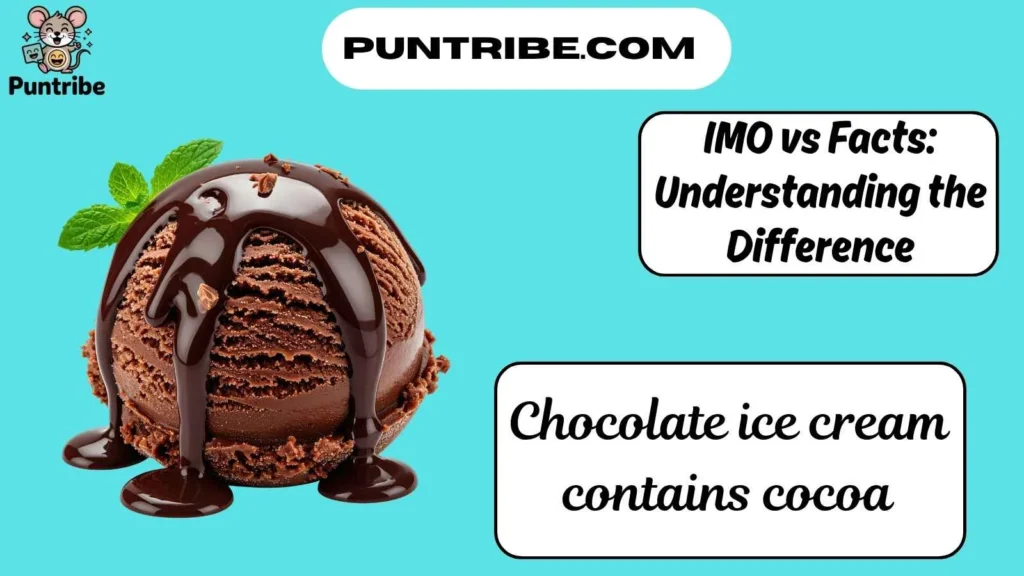
IMO vs Facts: Understanding the Difference ⚖️
| Opinion Statement | Fact Statement |
|---|---|
| IMO, chocolate ice cream tastes better. | Chocolate ice cream contains cocoa. |
| IMO, this movie is amazing. | The movie was released in 2026. |
| IMO, this team played well. | The team scored three goals. |
This distinction explains why IMO is so useful in online communication.
Common Variations of IMO 🔤
Several related acronyms have developed over the years.
IMHO
IMHO = In My Humble Opinion
Example:
“IMHO, this is the smartest solution.”
TBH
TBH = To Be Honest
Example:
“TBH, I expected a better result.”
FWIW
FWIW = For What It’s Worth
Example:
“FWIW, I had a great experience with that company.”
AFAIK
AFAIK = As Far As I Know
Example:
“AFAIK, the event starts at 8 PM.”
IMO Meaning on Social Media Platforms 🌐
The meaning of IMO remains consistent across major platforms.
- Facebook comments
- Instagram captions
- X posts
- TikTok discussions
- Reddit conversations
- Discord servers
- WhatsApp chats
- Messenger conversations
Regardless of the platform, IMO almost always means In My Opinion.
When You Should Use IMO 👍
- Sharing recommendations
- Discussing movies or books
- Reviewing products
- Giving friendly advice
- Participating in debates
- Discussing sports
- Talking about trends
- Expressing personal preferences
When You Should Avoid Using IMO 🚫
While useful, IMO is not appropriate in every situation.
- Formal academic papers
- Legal documents
- Professional reports
- Scientific research papers
- Official business contracts
In formal writing, complete phrases such as “In my opinion” are usually more appropriate.
FAQs: ❓
What does IMO mean in texting?
IMO means In My Opinion. It is used when sharing personal thoughts or viewpoints.
Is IMO rude?
No. In most cases, IMO helps make conversations more polite because it shows that a statement is a personal opinion rather than a fact.
What is the difference between IMO and IMHO?
IMO means “In My Opinion,” while IMHO means “In My Humble Opinion.”
Can I use IMO in professional communication?
It depends on the setting. Informal workplace chats may be fine, but formal documents should use full professional language.
Does IMO always mean In My Opinion?
In text messages, social media, and online conversations, IMO almost always means “In My Opinion.”
Final Thoughts: 💡
The IMO meaning in text is simple yet powerful. Standing for “In My Opinion,” this widely used acronym helps people express personal viewpoints while keeping conversations respectful and open-minded.
Whether you’re texting friends, participating in social media discussions, or chatting in online communities, understanding IMO can make digital communication clearer and more effective.
Remember that opinions differ, and that’s exactly why IMO exists. It allows people to share perspectives without presenting them as absolute facts, creating healthier and more productive conversations online.
Ready to learn more texting abbreviations? Explore related posts and expand your knowledge of modern internet slang and digital communication trends.

I’m a content creator and the voice behind Puntribe, where I share fun, creative, and engaging content for readers who love humor and clever wordplay. I enjoy turning simple ideas into entertaining posts and aim to keep everything easy to read, relatable, and enjoyable for everyone.